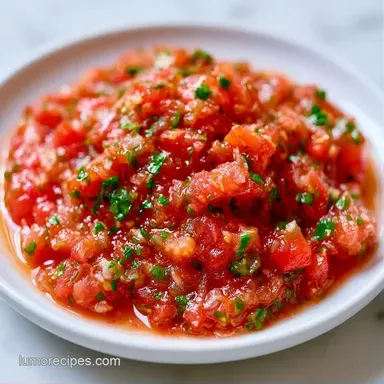
Food Processor Salsa: Zesty and Chunky
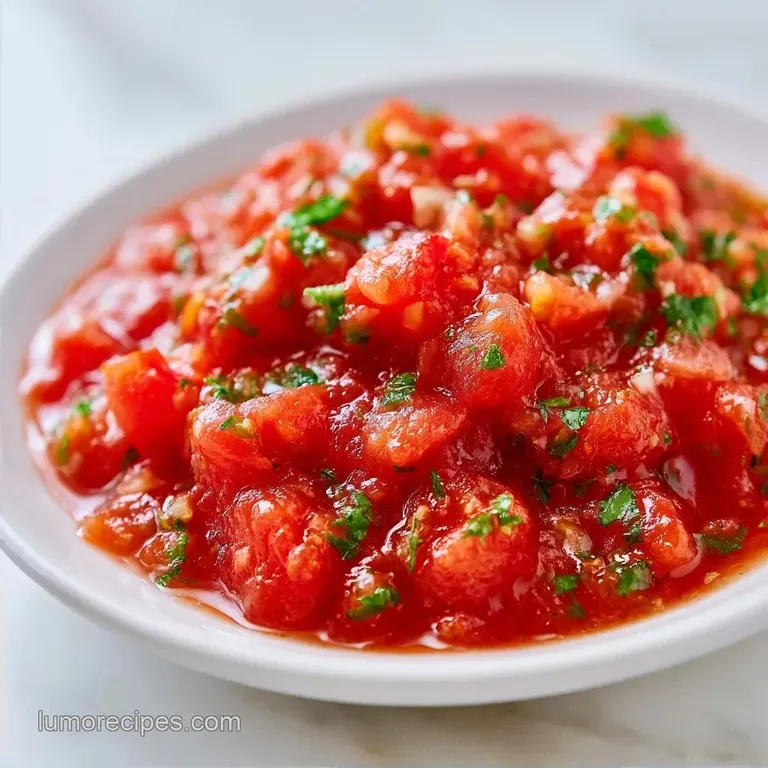
- Time:10 minutes active
- Flavor/Texture Hook: Zesty, chunky, and vibrant
- Perfect for: Busy weeknight appetizers or healthy meal prep
- Easy Food Processor Salsa
- What Each Ingredient Does
- The Essential Ingredients
- Tools You Will Need
- Steps to Make It
- Fixing Common Issues
- Troubleshooting Common Issues
- Creative Flavor Tweaks
- Adjusting Batch Sizes
- Debunking Salsa Myths
- Storage and Zero Waste
- Best Ways to Serve
- Recipe FAQs
- 📝 Recipe Card
That sharp, zesty smell of lime hitting fresh cilantro always reminds me of summer. I used to spend twenty minutes meticulously dicing tomatoes and onions, only to realize I’d spent more time prepping the dip than actually eating it. It felt like a chore rather than a treat.
Then I started using my machine. I realized that if you don't over process, you get that exact same chunky feel as hand chopped salsa but in a fraction of the time. It's a quick win for anyone who loves fresh flavors but hates the board work.
You can expect a vibrant, fresh result that tastes like it came from a kitchen, not a jar. This Food Processor Salsa stays bright and crisp, making it a great addition to any lunch or party spread.
Easy Food Processor Salsa
The Pulse Method: Short bursts of power prevent the blades from liquefying the tomatoes, which keeps the texture chunky.
Cold Produce: Using chilled vegetables helps the structure hold up better against the heat generated by the processor blades.
| Method | Time | Texture | Best For |
|---|---|---|---|
| Food Processor | 10 minutes | Uniformly chunky | Quick weeknights |
| Hand Chopped | 25 minutes | Irregular pieces | Small batches |
| Blender | 5 minutes | Smooth/Pureed | Taco sauces |
What Each Ingredient Does
| Ingredient | What It Does | Best Swap |
|---|---|---|
| Roma Tomatoes | Provides the bulk and acidity | Plum tomatoes |
| White Onion | Adds a sharp, clean bite | Red onion (sweeter) |
| Jalapeño | Brings the heat and grassiness | Serrano (hotter) |
| Fresh Lime | Brightens all other flavors | Lemon juice |
The Essential Ingredients
- 2 lbs Roma tomatoes, cored and quartered Why this? Lower water content prevents soupiness
- 1/2 cup white onion, roughly chopped Why this? Crisp flavor that cuts through the tomato
- 4 oz bell pepper, deseeded and chopped Why this? Adds sweetness and color
- 2 cloves garlic, peeled
- 10g jalapeño peppers, stemmed Why this? Classic heat profile
- 2 tbsp fresh lime juice
- 1/4 tsp ground cumin
- 1/2 cup fresh cilantro, loosely packed
- 1 tsp kosher salt
- 1/4 tsp black pepper
Tools You Will Need
You only need a few things for this. A food processor is the star here, and I usually use a Cuisinart or a Ninja. You'll also want a sharp knife for the initial rough chops and a tasting spoon.
Chef's Tip: If you want a deeper flavor, try adding a pinch of smoked paprika or a teaspoon of honey to balance the acidity.
Steps to Make It
- Roughly chop the tomatoes, onions, and peppers into uniform chunks. Note: Uniform sizes ensure you don't end up with some huge chunks and some mush.
- Place the onion, garlic, and jalapeños into the food processor. Pulse 3-5 times until finely minced.
- Add the tomatoes and bell pepper. Pulse in 1 second bursts typically 6 to 10 times-until the mixture reaches a chunky, diced consistency with pieces roughly 1/4 inch.
- Add the lime juice, salt, cumin, and black pepper. Pulse 2 more times to incorporate.
- Add the fresh cilantro and pulse once more.
- Taste and adjust lime juice or salt if necessary.
According to the pulsing techniques mentioned at Serious Eats, the key to avoiding a puree is to never hold the button down. Keep your finger moving.
Fixing Common Issues
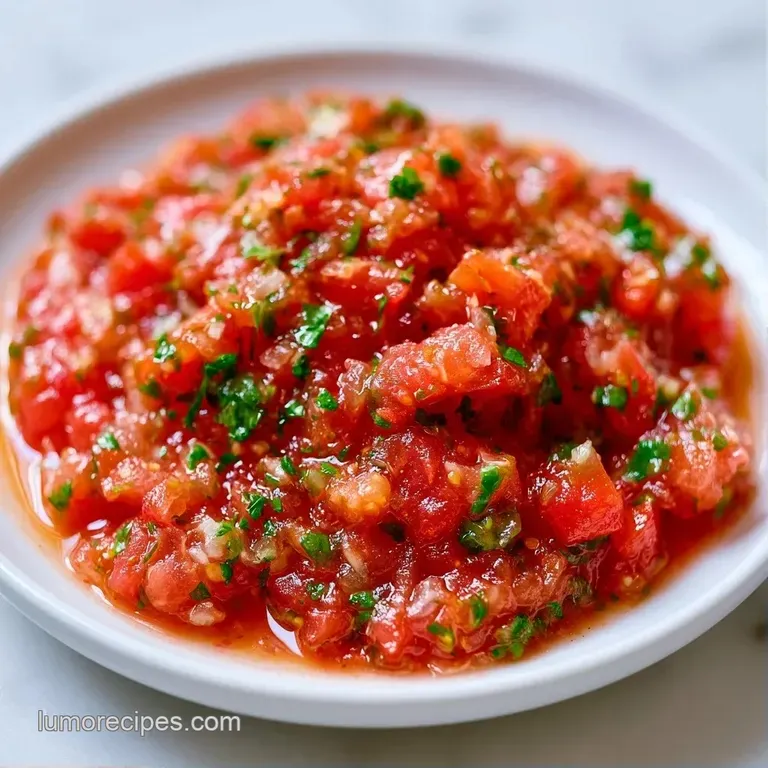
The most common complaint with a Food Processor Salsa is that it turns into a smoothie. This happens when you let the machine run for five seconds straight instead of pulsing. Once it's a puree, you can't go back, so be patient.
Troubleshooting Common Issues
| Issue | Solution |
|---|---|
| Why Your Salsa Is Watery | This usually happens if you use overly ripe tomatoes or don't core them properly. The seeds and gel release too much moisture when hit by the blades. |
| Why Your Salsa Is Too Spicy | Jalapeños vary wildly in heat. If you hit a "hot one," the spice can overwhelm the lime and salt. |
| Why Your Salsa Is Bland | Salt and acid are the volume knobs for flavor. If it tastes "flat," you likely need another squeeze of lime. |
If you find you prefer a smoother consistency, you might enjoy my Salsa in 15 Minutes recipe instead.
Creative Flavor Tweaks
You can easily shift the vibe of this recipe. For a smokier profile, swap the fresh jalapeño for a chipotle pepper in adobo. It changes the color slightly to a deeper red but adds a rich, campfire quality.
If you want something more traditional, you can try an Tomato Salsa for 6 recipe which uses charred vegetables. But for a daily driver, this fresh version is the way to go.
Quick Adjustments:
- For more heat: Leave the seeds in the jalapeño.
- For a sweeter taste: Use red bell pepper and a pinch of sugar.
- For a "green" twist: Double the cilantro and add a handful of spinach.
Adjusting Batch Sizes
Making this for a crowd or just for yourself is easy, but the ratios change slightly.
Scaling Down (Half Batch): Use 1 lb of tomatoes and 1 clove of garlic. I recommend using a smaller processor bowl if you have one, otherwise, the blades might just spin the ingredients around without cutting them. Reduce pulsing time by about 20%.
Scaling Up (Double Batch): Don't double the salt and cumin immediately. Start with 1.5x the spices, taste it, and then add more. Liquids like lime juice usually scale linearly, but spices can become overwhelming. Work in two batches to avoid overloading the motor and ensuring the texture stays chunky.
Debunking Salsa Myths
Some people claim that a food processor ruins the "soul" of the salsa. That's not true. As long as you pulse, the result is virtually identical to hand chopping. The only real difference is the uniformity of the dice.
Another myth is that you must peel the tomatoes. For this recipe, the skins provide necessary structure and fiber. Peeling them would make the Food Processor Salsa too soft and mushy.
Storage and Zero Waste
Store your salsa in an airtight glass jar in the fridge for up to 5 days. It actually tastes better on day two because the salt has more time to draw out the flavors.
I don't recommend freezing this specific recipe. The fresh tomatoes break down and become watery once thawed. If you must freeze it, use it as a base for a cooked sauce later.
Zero Waste Tips:
- Onion scraps: Save your onion skins and bell pepper stems in a freezer bag to make vegetable broth.
- Tomato cores: Compost them or toss them into a slow cooker with other scraps.
- Cilantro stems: Don't throw them away! They have more flavor than the leaves. Chop them finely and add them to the processor in step 2.
Best Ways to Serve
This is a versatile condiment. For a healthy lunch, scoop it over grilled chicken or a bowl of quinoa. It's also a staple for movie nights with a big bag of corn chips.
If you're making nachos, spoon the salsa on after the cheese has melted so the chips stay crispy. You can also use it as a marinade for shrimp or fish before grilling.
Perfect Pairings:
- Warm corn tortillas
- Sliced avocado with sea salt
- Black bean dip
- Grilled corn on the cob
Recipe FAQs
Are food processors good for salsa?
Yes, they are ideal. They allow you to control the texture through pulsing, which prevents the fresh ingredients from turning into a puree.
Is it better to make salsa in a blender or a food processor?
Food processors are superior. Blenders tend to liquify vegetables, whereas a processor maintains the chunky, diced consistency preferred in fresh salsa.
How to make salsa in a food processor?
Chop tomatoes, onions, and peppers into uniform chunks. Pulse the onion, garlic, and jalapeños first, then add the remaining vegetables and pulse in 1-second bursts until chunky.
Is it hard to make homemade salsa?
No, it is very simple. The entire process requires only 10 minutes of preparation time.
What is the best way to get restaurant quality salsa?
Balance the salt and acidity. Use fresh lime juice and kosher salt to brighten the flavors; for a cooked variation, try this salsa roja.
Is it true that you must blend salsa until smooth for the best flavor?
No, this is a common misconception. A food processor is actually better for achieving the 1/4 inch diced texture found in authentic salsas.
How to make the salsa thinner?
Pulse the mixture for longer durations. Increasing the number of pulses breaks down the Roma tomatoes more thoroughly, releasing more natural juices.
Food Processor Salsa