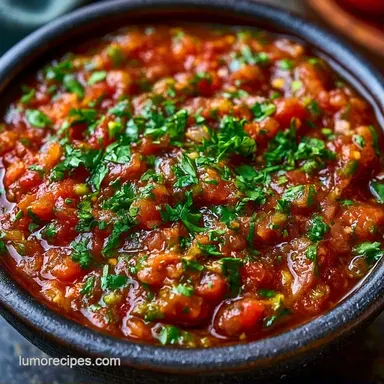
Spicy Food Processor Salsa in 10 Minutes
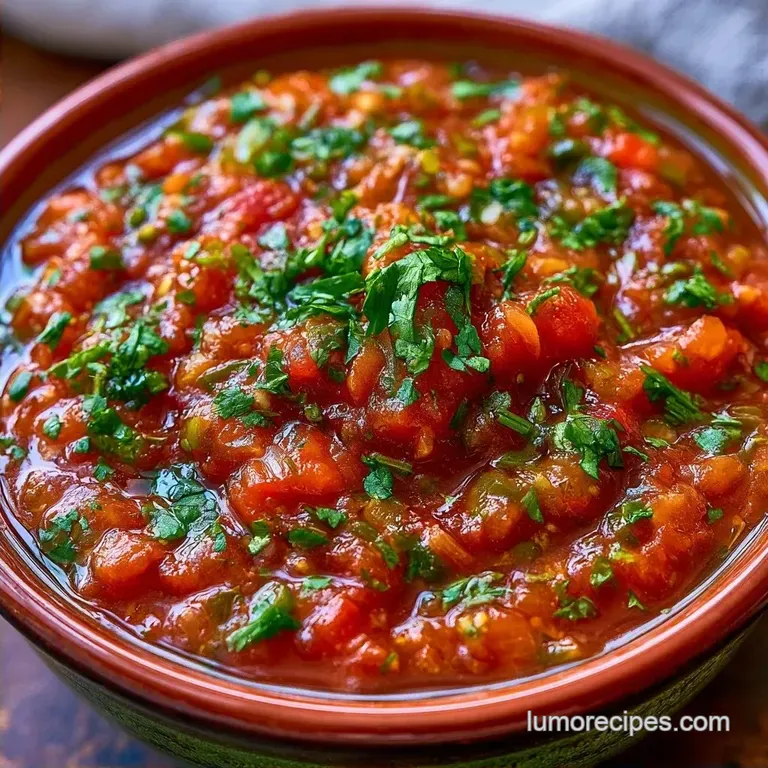
- Time: 10 min active
- Flavor/Texture Hook: Crisp, tangy, and bold
- Perfect for: Weeknight dinner or a quick party appetizer
The smell of fresh cilantro and sharp lime always takes me back to the street markets in Mexico. In those stalls, salsa isn't just a condiment, it's the heart of the meal. It's meant to be vibrant, punchy, and shared among friends with a mountain of warm chips.
I used to think you had to spend an hour chopping everything by hand to get it right. But honestly, that's a lot of work for a Tuesday night. I've found a way to get that same rustic feel using a machine, as long as you don't overdo it.
This classic Spicy Salsa hits all the right notes. It's budget friendly and relies on a few fresh ingredients to do the heavy lifting. You'll get a bold kick from the jalapeños and a bright finish from the lime.
The Truth About Spicy Salsa
Getting the texture right is where most people slip up. If you just hit the "blend" button, you end up with a thin soup that tastes like baby food. To keep your Spicy Salsa from turning into a puree, you have to use the pulse button.
The Pulse Method: Short bursts of power keep the tomato chunks intact. This creates a better mouthfeel and lets you taste the individual ingredients.
Aromatic Layering: Processing the onion and garlic first ensures they're finely minced. This prevents you from biting into a raw chunk of onion that overpowers everything else.
Right then, let's look at how this compares to the old school way.
| Method | Time | Texture | Best For |
|---|---|---|---|
| Food Processor | 10 mins | Consistent chunks | Quick weeknight prep |
| Molcajete/Hand | 30 mins | Rustic and varied | Slow weekend cooking |
The difference is mostly in the effort. Both versions taste great, but the processor wins on efficiency.
Ingredient Deep Dive
Not every tomato works here. I use Romas because they have thicker walls and less water, which keeps the Spicy Salsa flavors concentrated.
| Ingredient | What It Does | Best Swap |
|---|---|---|
| Roma Tomatoes | Provides the bulk and acidity | Plum tomatoes (similar water content) |
| Jalapeño | Adds the heat and "green" notes | Serrano peppers (for more heat) |
| Lime Juice | Cuts through the salt and brightens | Lemon juice (slightly different zing) |
| Fresh Cilantro | Adds a citrusy, herbal finish | Flat leaf parsley (milder flavor) |
Choosing the right produce is the easiest way to save money. Buy the tomatoes that feel firm and heavy for your own.
Smart Shopping List
Stick to the basics to keep this budget friendly. Most of these are staples you probably already have in the crisper drawer.
- 4 large (900g) Roma tomatoes, cored Why this? Low moisture keeps the salsa thick
- 1/2 cup (75g) white onion, roughly chopped Why this? Provides a sharp, clean bite
- 3 cloves (15g) garlic, peeled Why this? Fresh garlic beats the jarred stuff
- 30g jalapeño peppers, stems removed Why this? Balanced heat and fresh flavor
- 1/2 cup (15g) fresh cilantro, stems removed Why this? Essential for that authentic aroma
- 2 tbsp (30ml) fresh lime juice Why this? Wakes up all the other flavors
- 1 tsp (6g) salt Why this? Draws out juices from the tomatoes
- 1/2 tsp (1g) ground cumin Why this? Adds a subtle, earthy warmth
- 1/4 tsp (1g) black pepper Why this? A tiny bit of back end heat
Chef Note: If you want a more budget friendly option, buy a large bag of onions and freeze the chopped halves. They work just as well in a food processor.
Essential Kitchen Tools
You only need a few things. A food processor is the star here, but a small bowl for mixing helps.
- Food processor (any size)
- Spatula for scraping the sides
- Citrus juicer (or just your hands)
- Measuring spoons
How to Make It
Let's get this Spicy Salsa moving. The goal is speed and precision.
- Place the chopped white onion, garlic cloves, and jalapeños into the food processor bowl.
- Pulse 3-4 times until the aromatics are finely minced but not a paste. Note: This prevents raw garlic "bombs" in your dip
- Add the cored Roma tomatoes to the bowl.
- Add the fresh cilantro, lime juice, salt, cumin, and black pepper.
- Ensure the tomatoes are evenly distributed around the blade.
- Pulse the mixture in 1 second bursts.
- Scrape down the sides of the bowl with a spatula every 5 pulses.
- Stop immediately until the mixture is combined but still shows visible chunks of tomato and onion.
If you let it run for even 10 seconds too long, you'll lose the Spicy Salsa texture. Keep it chunky!
Troubleshooting Guide
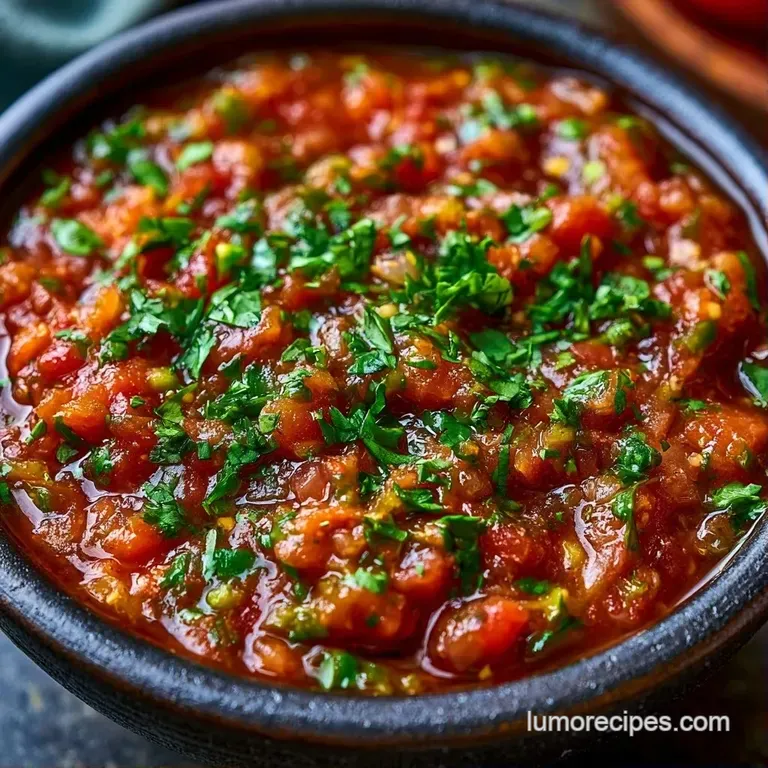
Even with a simple recipe, things can go sideways. Usually, it's a matter of produce moisture or a heavy hand with the peppers.
| Issue | Solution |
|---|---|
| Salsa too watery | This usually happens if the tomatoes are overripe or if you over processed the mixture. When the cell walls of the tomato break down too much, they release all their liquid. |
| Fix "Too Much Heat" | If the jalapeños were hotter than expected, don't panic. Adding more tomatoes or a squeeze of extra lime juice can help balance the fire. |
| Why does it taste "flat" | A lack of acidity is the usual culprit. If the Spicy Salsa tastes boring, add another teaspoon of lime juice or a pinch more salt to wake it up. |
Flavor Twists and Swaps
I love playing around with the heat levels. If you want something different, try adding a handful of roasted corn kernels for a sweetness that balances the spice. For a deeper, smokier vibe, you can swap the fresh jalapeños for a chipotle pepper in adobo sauce.
If you're in the mood for something cooked, my Mexican Salsa Roja recipe is a great alternative that uses roasted vegetables.
You can also adjust the "kick" based on who you're serving. If you're feeding kids, remove all the seeds from the jalapeños. If you're serving a crowd of heat seekers, keep the seeds and add a pinch of cayenne. These Spicy Salsa twists make it easy to customize for any guest.
Decision Shortcut: Want more heat? Keep the jalapeño seeds. Want it chunkier? Pulse 2 fewer times. Want it zestier? Add an extra squeeze of lime.
Scaling Tips
Making a bigger batch of Spicy Salsa for a party is easy, but don't just double everything blindly.
Scaling Down (1/2 batch): Use a smaller food processor bowl if you have one. If the bowl is too big, the ingredients will just smear against the sides instead of getting chopped.
Scaling Up (2x-4x): When doubling, only increase the salt and cumin to 1.5x initially. Taste it first, then add more. Spices can become overwhelming when scaled linearly. Also, work in batches if your processor is small to maintain that Spicy Salsa proportions and texture.
Myths About Salsa
There's a common idea that Spicy Salsa needs cooking to be "authentic." While roasted salsas are great, fresh salsa cruda is a staple in Mexico and is prized for its brightness.
Another myth is that more peppers always mean more heat. The real heat lives in the pith and seeds, not the flesh. You can use five jalapeños without seeds and it will be milder than one pepper with all the seeds. Making Spicy Salsa is more about balancing the components than just adding heat.
Storage and Waste Tips
Store your Spicy Salsa in an airtight glass jar in the fridge. It stays fresh for about 5 days. After that, the lime juice starts to break down the vegetables and it loses that crisp snap.
I don't recommend freezing it, as the tomatoes will separate and become mushy when thawed. If you have too much, use it as a marinade for grilled chicken or fish.
To avoid waste, don't toss the cilantro stems. They have a ton of flavor. Throw them into a freezer bag and add them to your next vegetable stock. If you want another quick option, you can try this homemade salsa recipe for a different take on the fresh style. Your fresh Spicy Salsa is great, but variety keeps the meal prep interesting.
Plating Your Dish
Presentation makes a difference, even for a dip. Instead of just a bowl, create a Spicy Salsa platter. Put the salsa in a small ceramic bowl in the center and surround it with a variety of chips, sliced cucumbers, and radish rounds.
A sprinkle of extra fresh cilantro on top makes this Spicy Salsa look like it came from a restaurant. If you're serving it with tacos, put a dollop of sour cream or crumbled cotija cheese right on top of the salsa. It adds a creamy element that balances the acidity of the lime.
Honestly, as long as it tastes bold and fresh, your guests will love this homemade Spicy Salsa. Just keep the chips flowing!
Recipe FAQs
Is it hard to make homemade salsa?
No, it is very simple. It takes only 10 minutes to prepare using fresh ingredients and a food processor.
Is a blender or a food processor better for making salsa?
A food processor is superior. It allows you to pulse the ingredients, keeping the chunks visible rather than turning the mixture into a smooth puree.
How to make salsa in a food processor?
Pulse the white onion, garlic, and jalapeños first. Add the tomatoes, cilantro, lime juice, and spices, then pulse in 1-second bursts until combined but still chunky.
Why does Mexican restaurant salsa taste so good?
The secret is the balanced texture and acidity. Achieving that specific consistency requires pulsing the vegetables briefly so they are minced but not blended into a paste. This same focus on flavor balance is used in our chicken thigh curry.
Is salsa good for diabetics?
Yes, it is a great option. With only 30 calories per serving and fresh vegetable ingredients, it is naturally low in sugar.
Is it true that you can substitute fresh Roma tomatoes with tomato sauce for the same result?
No, this is a common misconception. Tomato sauce lacks the physical structure and fresh acidity of Roma tomatoes, which would make the salsa mushy and flavorless.
How to make the salsa thinner?
Pulse the mixture for a few extra bursts. This further breaks down the cell walls of the tomatoes, releasing more liquid to thin the consistency.
Spicy Food Processor Salsa