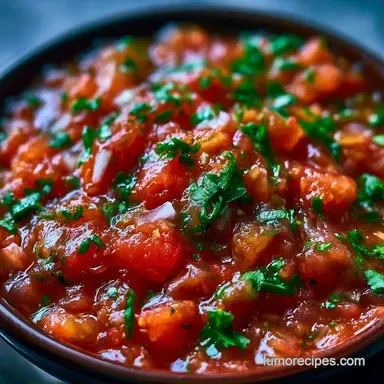
Mexican Salsa: Authentic Restaurant Style
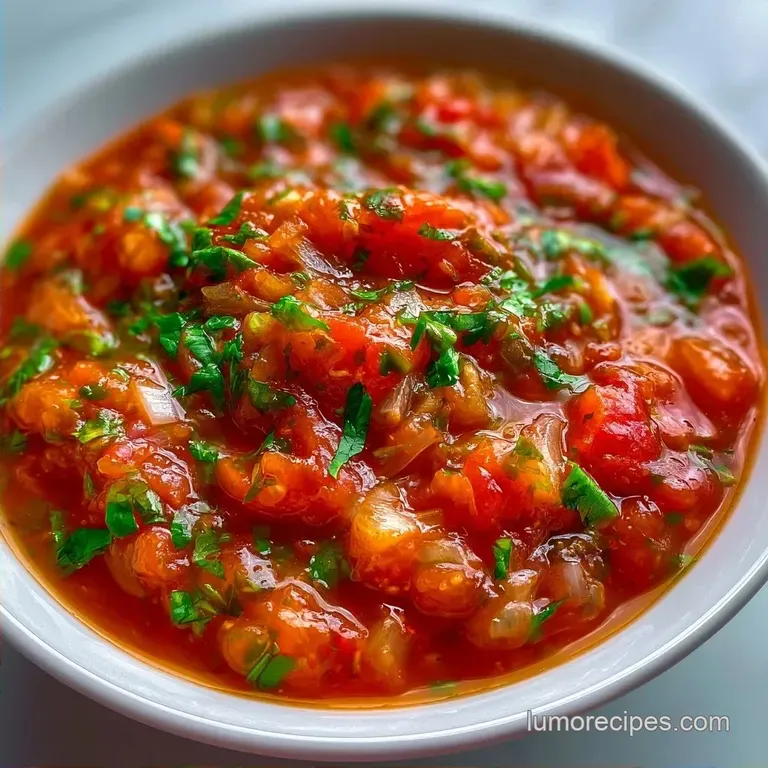
- Time: 10 min active + 10 min resting
- Flavor/Texture Hook: Zesty, chunky, and bright
- Perfect for: Quick weeknight appetizers or taco night
The smell of fresh cilantro hitting a cutting board always reminds me of my first attempt at this. I used regular beefsteak tomatoes back then, and it was a disaster. I ended up with a thin, pink soup that couldn't even hold up a single chip. It took me a while to realize that the tomato variety changes everything.
Roma tomatoes are the hero here. They have thicker walls and fewer seeds, which means your Mexican Salsa stays thick and chunky rather than turning into a drink. When you smell that sharp lime juice hit the salt, you know you're on the right track.
You can expect a bright, zesty result that tastes like it took hours, but actually comes together in a flash. This Mexican Salsa is meant to be accessible, using ingredients you can find at any budget grocery store without sacrificing that punchy flavor.
Mexican Salsa
The Pulse Method: Using short bursts in the blender stops the blades from liquefying the vegetables. This keeps those small, satisfying chunks of onion and tomato intact.
The Salt Soak: Adding salt early draws out just enough moisture to blend the flavors without making the mix runny. If you're in a rush, a Salsa in 10 Minutes recipe usually follows a similar logic of rapid blending.
| Feature | Blender Method (Fast) | Hand Chopped (Classic) |
|---|---|---|
| Time | 10 minutes | 25 minutes |
| Texture | Small, uniform bits | Large, rustic chunks |
| Best For | Chips and dipping | Topping tacos |
What Each Ingredient Does
| Ingredient | What It Does | Best Swap |
|---|---|---|
| Roma Tomatoes | Provides body and base | Canned crushed (drained) |
| Jalapeños | Adds heat and grassiness | Serrano peppers (hotter) |
| Lime Juice | Cuts through the fat/salt | Lemon juice |
| White Onion | Adds sharp, crisp bite | Red onion (sweeter) |
The Best Salsa Ingredients
For a budget friendly Mexican Salsa, stick to the basics. You don't need expensive organic produce to get a great result. Just make sure your cilantro is bright green and not wilting.
- 4 medium Roma tomatoes (approx. 1 lb / 450g), roughly chopped Why this? Lower water content prevents soupiness
- 1/2 medium white onion (approx. 100g), peeled and quartered Why this? Sharp contrast to sweet tomato
- 2 fresh jalapeños (approx. 40g), stems removed Why this? Reliable mid level heat
- 3 cloves garlic (approx. 15g), smashed Why this? Pungent aromatic base
- 1/2 cup (15g) fresh cilantro, packed Why this? Essential herbal brightness
- 2 tbsp (30ml) fresh lime juice Why this? Acid balances the salt
- 1 tsp (6g) fine sea salt Why this? Pulls flavors together
- 1/4 tsp (1g) ground cumin Why this? Adds earthy depth
Essential Salsa Tools
You only need a few things. A standard blender or food processor works best. If you don't have one, a mortar and pestle is the traditional way to go, though it takes more elbow grease.
Chef's Tip: To get the garlic's flavor without big raw chunks, smash the cloves with the flat of your knife before throwing them in. This breaks the cell walls and releases the oils.
Making Your Mexican Salsa
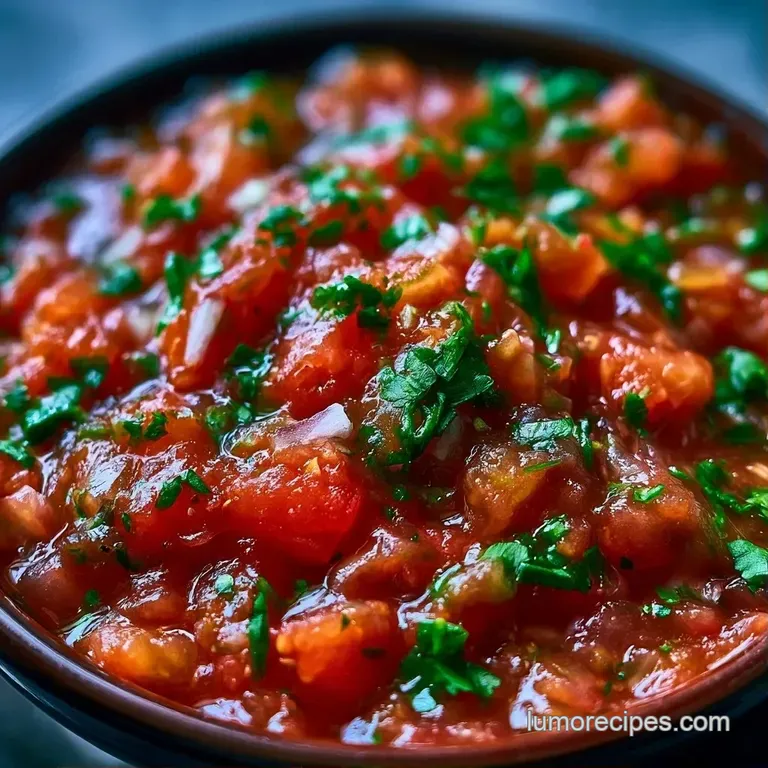
- Roughly chop the Roma tomatoes into quarters. Peel the onion and smash the garlic cloves with the flat side of your knife to release the oils.
- Place the tomatoes, onion, jalapeños, and garlic into the blender. Pulse 5 7 times in short bursts until vegetables are broken down but still retain visible, small chunks. Note: Don't hold the button down or you'll get puree.
- Transfer the mixture to a bowl. Stir in the chopped cilantro, lime juice, salt, and cumin.
- Let the Mexican Salsa sit at room temperature for 10 minutes before serving to allow flavors to fuse.
Fixing Common Salsa Issues
The biggest hurdle with Mexican Salsa is usually the consistency. If you see too much liquid pooling at the bottom, you probably over pulsed the tomatoes. According to Serious Eats, the variety of tomato significantly impacts the water to pulp ratio.
The Salsa is Too Watery
This happens when the blender runs too long or you used juicy tomatoes. You can strain some of the liquid or add a bit more finely chopped raw onion to soak it up.
The Heat is Overpowering
Jalapeños vary wildly in spice. If it's too hot, stir in a teaspoon of sugar or more lime juice to neutralize the capsaicin.
The Flavor Feels Flat
This is almost always a salt or acid issue. Taste it, then add a pinch more salt or a squeeze of lime.
| Problem | Root Cause | Solution |
|---|---|---|
| Too thin | Over blending | Strain liquid or add chopped veg |
| Too spicy | Hot pepper seeds | Add more tomato or lime juice |
| Bland taste | Lack of acid/salt | Add 1 tsp lime juice and pinch of salt |
Salsa Swaps and Twists
If you want something deeper, try a Roja in 30 Minutes recipe, which involves roasting the vegetables first. Roasting changes the sugars in the tomatoes and gives you a smokier profile.
For those who want a different kick, the "Serrano Switch" is a great move. Replace the jalapeños with Serranos for a sharper, more intense heat. If you're watching your sodium, swap the sea salt for a potassium based salt substitute or increase the lime juice to compensate for the lack of salt.
For a Paleo or Whole30 version, this recipe is already compliant. Just ensure your cumin is pure and not a blend with added sugars.
Adjusting Batch Size
When you're making a smaller batch, say half, be careful with the blender. A small amount of ingredients can get stuck under the blades. You might need to stir the mixture manually between pulses.
For larger crowds, don't just multiply everything by four. Scale the salt and cumin to 1.5x first, then taste and add more. Liquids like lime juice can also become overpowering if scaled linearly. Work in batches if your blender is small to avoid over processing the bottom layer.
Storage Guidelines
Store your Mexican Salsa in an airtight glass jar in the fridge for up to 5 days. It actually tastes better on day two because the salt has more time to penetrate the vegetables.
Don't freeze this. The water in the tomatoes expands and breaks the cell walls, leaving you with a separated, watery mess once it thaws.
To avoid waste, don't toss the cilantro stems. Chop them very finely and blend them right in with the garlic. They hold a huge amount of flavor that usually goes in the bin.
Serving Your Fresh Salsa
The best way to serve Mexican Salsa is in a chilled bowl. The cold temperature makes the lime and cilantro pop against the heat of the jalapeño.
If you're using chips, go for thick, corn based tortilla chips. Thin chips will snap under the weight of a chunky salsa. For a more professional look, garnish with a few whole cilantro leaves and a lime wedge on the side.
Avoid putting the salsa in a plastic squeeze bottle if it's chunky, as it will clog. Stick to a bowl and a sturdy spoon. Trust me, the texture is the best part, so don't try to make it too smooth.
Recipe FAQs
How to make authentic Mexican salsa at home?
Pulse tomatoes, onion, jalapeños, and garlic 5 7 times in a blender. Stir in cilantro, lime juice, salt, and cumin, then let the mixture sit for 10 minutes to allow the flavors to fuse.
How to make salsa in a food processor?
Pulse the vegetables in short bursts. This prevents the ingredients from over processing, ensuring the salsa retains small, visible chunks rather than becoming a smooth puree.
Is it hard to make homemade salsa?
No, it takes only 20 minutes total. Because there is no cooking involved, the process is a straightforward combination of rough chopping and pulsing.
What salsa do most Mexican restaurants use?
They typically use a blended "salsa roja." This style balances fresh acidity and heat for a consistent flavor. If you enjoy these fresh blended flavors, see how the same acid technique works in our taco dip.
Can salsa help lower cholesterol?
Yes, when made with fresh vegetables. These ingredients are naturally low in saturated fats and high in nutrients, making it a heart healthy condiment.
How to prepare a thin salsa?
Pulse the ingredients for a few extra seconds. Increasing the blending time breaks down the Roma tomatoes further, releasing more natural juices for a smoother consistency.
Is it true that you can freeze salsa for longer storage?
No, this is a common misconception. Freezing causes the water in the tomatoes to expand and break cell walls, resulting in a separated, watery mess once thawed.
Authentic Mexican Salsa